

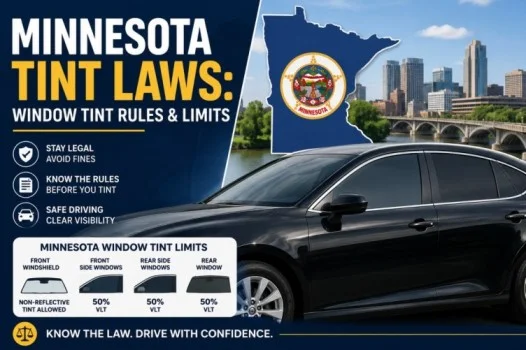
Minnesota has specific rules governing window tint and other glazing materials on motor vehicles. These requirements are designed to preserve visibility while placing limits on how much light vehicle windows may block or reflect. The main rules are contained in Minnesota Statutes Section 169.71.
What Are Minnesota Tint Laws?
Minnesota’s window tint law regulates the amount of visible light that can pass through certain vehicle windows. Under the statute, a side or rear window generally cannot have light transmittance below 50 percent, plus or minus 3 percent, and its luminous reflectance generally cannot exceed 20 percent, plus or minus 3 percent.
This means that simply choosing a tint based on how dark it looks may not be enough. The measured light transmission of the window and tint material is what matters under the law.
Minnesota Window Tint Laws for the Windshield
The windshield has stricter requirements than many other vehicle windows. Minnesota law prohibits material on the windshield that makes it more reflective or otherwise reduces light transmittance.
The law also addresses visibility through the windshield. A windshield that is cracked or discolored to an extent that limits or obstructs proper vision is prohibited. Drivers must also maintain adequate visibility when frost or steam covers the windshield or front side windows.
Because windshield requirements are particularly important for visibility, vehicle owners should check the current statute before applying any aftermarket material.
Side and Rear Window Tint
Minnesota law generally permits tinting on side and rear windows when the resulting light transmission remains within the statutory limits. The relevant standard is at least 50 percent visible-light transmittance, with the statute allowing a measurement tolerance of plus or minus 3 percent.
The law also prohibits window material with a highly reflective or mirrored appearance. Therefore, compliance involves more than darkness alone; reflectivity is also regulated.
Tint Markings
Minnesota has an additional requirement for aftermarket window material. Material applied after August 1, 1985, must have a permanent marking showing its percentage of light transmittance and reflectance. The marking must be installed so that it does not obstruct vision and can be read when the material is installed on the vehicle.
This requirement is important because it gives information about the characteristics of the installed material rather than relying only on its appearance.
Medical Tint Exceptions
Minnesota law provides an exception for certain medical or prescription needs. A prescription or physician’s statement must establish the medical need and specify the minimum percentage to which light transmittance may be reduced. The document must also have an expiration date no more than two years after it was issued.
There are also specific rules concerning situations where the person named in the medical documentation is not present in the vehicle. The statute sets conditions involving qualifying family relationships or personal-care arrangements, as well as identifying the vehicle.
Vehicle-Specific Exceptions
Certain vehicle types have additional exceptions under Minnesota law. These include rear windows of pickup trucks, certain windows on vans, side and rear windows of licensed funeral vehicles, side and rear windows of limousines, and certain police-vehicle windows.
These exceptions are specific to the vehicle categories described by statute, so they should not automatically be assumed to apply to ordinary passenger vehicles.
Why Checking the Current Law Matters
Tint regulations can change through legislation. The Minnesota Legislature has amended Section 169.71 in recent years, including changes affecting exceptions. The Revisor of Statutes identifies amendments to the section in both 2025 and 2026.
For that reason, anyone researching Minnesota window tint requirements should consult the current version of the statute rather than relying on an older article or outdated tint chart.
Read Also : AT3 ARO Micro Red Dot Review: Features, Performance & Value
Conclusion
Minnesota window tint laws focus on visibility, light transmission, reflectivity, and proper identification of aftermarket glazing materials. For many covered side and rear windows, the key standard is 50 percent visible-light transmittance, subject to the statutory tolerance. Windshield requirements are more restrictive, while specific medical and vehicle-related exceptions exist.
Because laws and exceptions can change, the safest approach for accurate legal information is to review the current Minnesota Statutes before making decisions about vehicle window tint.
Read Also : Microsoft Modern Workplace: Solutions & Services Guide
Frequently Asked Questions
What is the legal tint limit in Minnesota?
For covered side and rear windows, Minnesota law generally requires at least 50 percent visible-light transmittance, with a statutory tolerance of plus or minus 3 percent.
Is reflective window tint legal in Minnesota?
Highly reflective or mirrored window material is prohibited under the state’s vehicle glazing rules.
Does Minnesota allow medical tint exemptions?
Yes. The law provides an exception for qualifying prescription or medical needs when the required documentation and conditions are satisfied.
Does aftermarket tint need a marking?
Yes. Aftermarket window material covered by the statute must have a permanent marking indicating its transmittance and reflectance percentages.
Can Minnesota tint laws change?
Yes. Minnesota’s tint statute has been amended over time, so checking the latest statutory version is important when researching current requirements.