
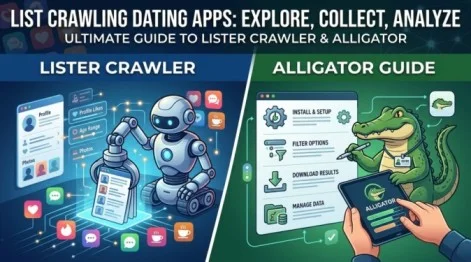
The terms “list crawling dating apps,” “Lister Crawler,” and “Alligator List Crawling” can sound confusing if you encounter them online. They generally relate to tools, services, or techniques associated with collecting and organizing publicly available information from websites and online platforms. In the dating-app context, however, data collection requires extra care because profiles can contain personal and sensitive information.
This guide explains what these terms can mean, how list crawling works at a high level, and what users and businesses should consider when dealing with dating-app data.
What Is List Crawling?
List crawling is a process in which software automatically visits webpages and organizes information found on those pages. Search engines use similar crawling concepts to discover and index publicly accessible web content.
A crawler can follow links between pages and collect information that is intentionally made public. Depending on the website, this might include page titles, publicly displayed categories, general descriptions, or other non-sensitive information.
However, crawling is not automatically permitted simply because information can be viewed online. Websites can establish rules governing automated access through their terms of service, technical restrictions, and other policies.
What Is a Dating-App Crawler?
A dating-app crawler generally refers to software designed to collect information from dating-related webpages or services. Some tools may be intended for legitimate research, website indexing, testing, or analyzing publicly available content.
Dating apps are different from ordinary websites because their profiles can contain personal information, photographs, locations, relationship preferences, and other details that users may reasonably expect to remain within the platform.
For this reason, collecting or republishing dating-profile information can create significant privacy concerns.
Understanding Lister Crawler
Lister Crawler may be used as a name or phrase for a crawling or listing-related tool. The exact functionality can depend on the particular software or website using the name.
Generally, a crawler of this type could be associated with finding and organizing web pages or publicly accessible listings. Before using any crawler, it is important to understand what information it collects, where the information comes from, and how the collected data will be used.
Users should also check whether the service has documentation explaining its data practices and whether automated access is permitted.
What Is Alligator List Crawling?
The phrase “Alligator list crawling” is not a universally recognized technical standard. It may refer to a particular tool, service, project, or search phrase rather than a specific type of crawling technology.
If you encounter a service using this terminology, check its official documentation before assuming what it does. Look for information about supported websites, permitted uses, data retention, privacy policies, and terms of service.
This is especially important when the service involves dating platforms or other websites containing personal information.
How Does Web Crawling Work?
At a basic level, a crawler follows a series of steps:
- It starts with a webpage or approved source.
- It identifies links or publicly available pages.
- It requests accessible content.
- It analyzes information contained on those pages.
- It organizes permitted information into a database or index.
- The resulting information can then be used for an authorized purpose.
Responsible crawling should respect website rules, access restrictions, privacy requirements, and applicable laws.
Is Crawling Dating-App Data Legal?
There is no simple yes-or-no answer. The legality of collecting online information depends on factors such as the type of data, how it is collected, where the people are located, applicable privacy laws, and the website’s terms.
Public availability does not necessarily mean information can be freely copied, stored, sold, or redistributed.
Businesses should therefore obtain appropriate legal and privacy guidance before collecting personal information from dating platforms.
Privacy and Security Considerations
Dating profiles can contain information that users consider highly private. Even information that appears publicly accessible can become more sensitive when collected in large quantities and combined into a searchable database.
Responsible data practices include collecting only information that is genuinely necessary, avoiding sensitive personal information, protecting stored data, respecting deletion requests where applicable, and being transparent about how information is used.
Organizations should also avoid creating databases designed to identify, track, or profile individuals without an appropriate legal and ethical basis.
Safer Alternatives to Dating-App Crawling
If your goal is market research or dating-industry analysis, there are safer approaches. You can use official APIs where available, publicly released datasets, aggregated statistics, surveys, or information provided directly by users with appropriate consent.
For SEO research, analyzing publicly accessible website structure and general content can often provide useful insights without collecting individual dating profiles.
Read also : Atlantis: The Lost Empire Live Action: Cast, Release & What We Know
Final Thoughts
List crawling dating apps, Lister Crawler, and Alligator List Crawling are phrases that can refer to different tools or concepts involving automated collection and organization of online information. Their exact meanings depend on the specific service or context.
When dating platforms are involved, privacy should be a priority. Automated collection of personal profiles can create legal, ethical, and security concerns, so responsible users should follow platform rules, applicable privacy requirements, and appropriate data-protection practices.
Frequently Asked Questions
What is a dating-app crawler?
A dating-app crawler is software that automatically accesses and organizes information from dating-related webpages or services. Its permitted use depends on the platform and applicable rules.
Is Lister Crawler a dating app?
Not necessarily. “Lister Crawler” is a term that may refer to a crawling or listing-related service. Its exact function depends on the particular product or website using the name.
What does Alligator List Crawling mean?
It is not a universally defined technical term. It may describe a particular crawling tool, service, or project, so users should check the relevant provider’s documentation.
Can crawlers collect dating profiles?
Technically, automated software can process information available through websites, but collecting dating profiles raises important privacy and legal concerns. Platform rules and applicable laws should always be considered.
Is web crawling the same as web scraping?
They are related but not identical. Crawling generally focuses on discovering and accessing webpages, while scraping usually refers to extracting specific information from those pages.