

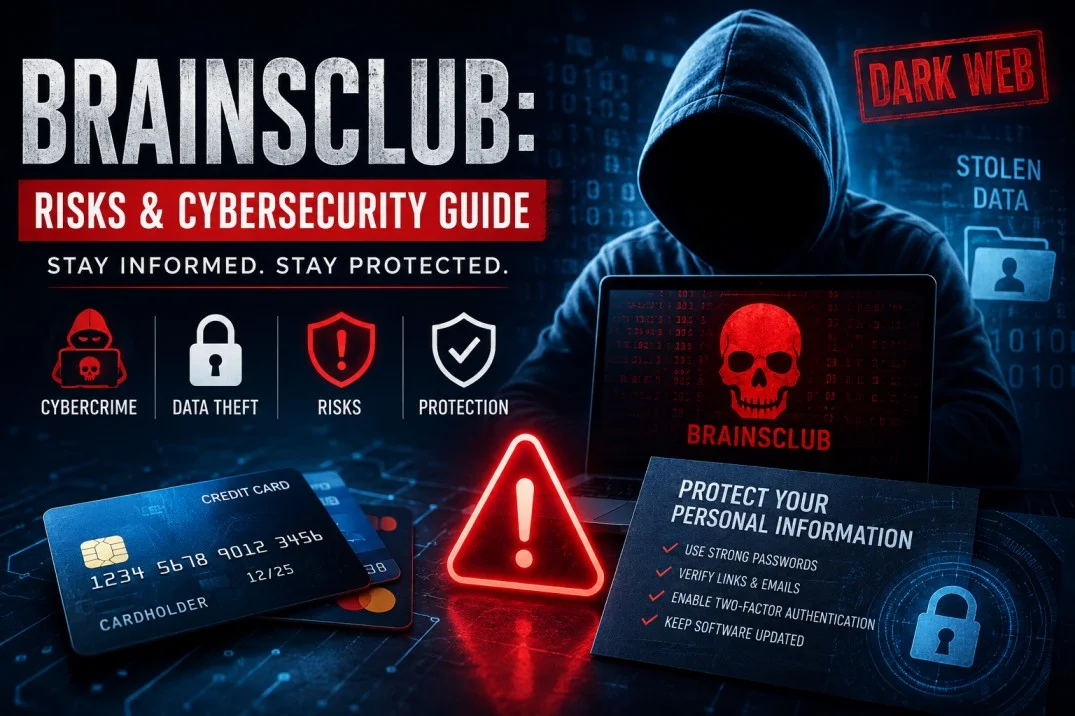
The internet offers incredible convenience for shopping, banking, communication, and business. However, it has also become a target for cybercriminals who use underground platforms to trade stolen information. One name that frequently appears in cyber security discussions is Brainsclub. It has been widely reported by security researchers as an alleged underground marketplace associated with stolen payment card data.
Understanding Brainsclub and the risks connected to such platforms is important for both individuals and businesses. This guide explains what Brainsclub is, why it is considered dangerous, and the practical cyber security steps you can take to protect your personal information.
What Is Brainsclub?
Brainsclub is a name commonly mentioned in cybersecurity reports as an alleged online marketplace connected to the sale of stolen payment card information. According to public investigations, cybercriminals reportedly used the platform to exchange compromised financial data obtained through illegal methods.
Because these types of platforms operate outside the law, their domains and infrastructure often change to avoid detection. They should not be confused with legitimate financial or online services.
How Stolen Payment Data Is Collected
Cybercriminals use several methods to obtain financial information before attempting to sell or misuse it. Common techniques include:
Phishing Emails
Fraudsters send fake emails that appear to come from trusted companies, asking users to enter login credentials or payment details.
Data Breaches
When organizations experience security breaches, attackers may steal customer information, including usernames, passwords, and payment card details.
Malware
Malicious software can secretly record keystrokes, capture passwords, or monitor online activity.
Fake Shopping Websites
Some fraudulent websites imitate legitimate online stores to trick customers into entering payment information.
Card Skimming
Criminals sometimes install skimming devices on ATMs or payment terminals to capture card information during transactions.
Understanding these methods helps users recognize and avoid common cyber threats.
Warning Signs of Online Fraud
Knowing the warning signs can help prevent cybercrime. Be cautious if you notice:
- Emails requesting urgent action or personal information
- Unexpected password reset messages
- Suspicious payment requests
- Websites without HTTPS encryption
- Unknown attachments or download links
- Deals that appear unrealistically cheap
Always verify communications through official company websites rather than clicking links in unsolicited emails.
How to Protect Yourself Online
Practicing good cybersecurity habits greatly reduces your chances of becoming a victim.
Use Strong Passwords
Create unique passwords for every online account. Combining uppercase letters, lowercase letters, numbers, and symbols makes passwords harder to crack. A password manager can help store them securely.
Enable Multi-Factor Authentication
Multi-factor authentication (MFA) adds an extra layer of protection by requiring a second verification step before granting account access.
Monitor Financial Accounts
Review your bank and credit card statements regularly. Report any unfamiliar transactions immediately to your financial institution.
Keep Software Updated
Operating system and software updates often contain important security patches that protect against newly discovered vulnerabilities.
Avoid Suspicious Links
Never click links or download attachments from unknown senders. If something seems suspicious, verify the source before taking any action.
Cybersecurity Tips for Businesses
Organizations also play a major role in preventing cybercrime. Businesses should:
- Train employees to recognize phishing attempts.
- Encrypt sensitive customer information.
- Perform regular security audits.
- Install reliable endpoint protection software.
- Monitor networks for suspicious activity.
- Keep systems and applications updated.
A layered cybersecurity strategy helps reduce the likelihood of successful attacks.
What to Do If Your Information Is Compromised
If you believe your payment information or personal data has been exposed:
- Contact your bank or credit card issuer immediately.
- Report unauthorized transactions.
- Change passwords for affected accounts.
- Enable multi-factor authentication where available.
- Monitor your financial accounts closely.
- Watch your credit reports for unusual activity if available in your region.
Quick action can help minimize financial losses and prevent additional damage.
Read Also : Why Is Screen Mirroring Not Working on iPhone? Fixes
Final Thoughts
Brainsclub is widely referenced in cybersecurity reporting as an alleged underground marketplace linked to stolen financial information. While the platform itself is associated with illegal activities, learning about it can help users better understand the risks of cybercrime and the importance of strong online security practices.
Frequently Asked Questions
What is Brainsclub?
Brainsclub is a name associated in public cybersecurity reporting with an alleged underground marketplace linked to stolen payment card data.
Is Brainsclub a legitimate website?
No. It has been reported as an alleged cybercrime platform and should not be considered a legitimate online service.
How can I protect myself from payment card fraud?
Use strong passwords, enable MFA, monitor your financial accounts, update your devices, and avoid suspicious emails and websites.
What should I do if my card information is stolen?
Contact your bank immediately, report unauthorized transactions, replace affected cards if necessary, and continue monitoring your accounts for suspicious activity.