

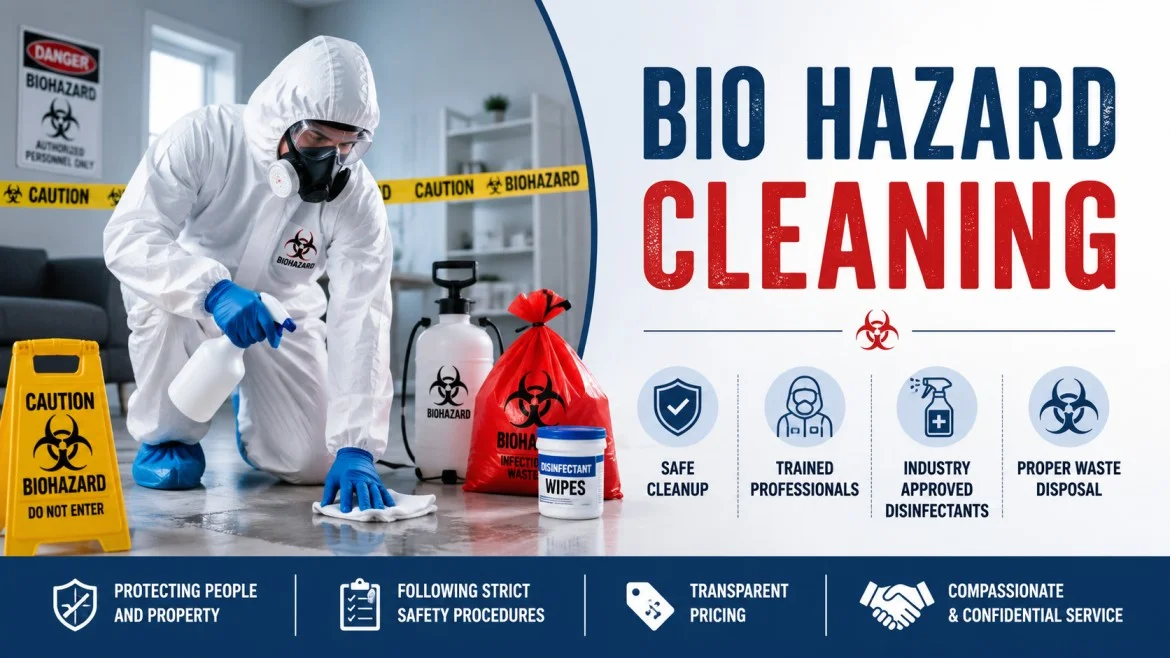
Bio hazard cleaning is a specialized cleaning process used to safely remove biological contaminants that may pose health risks to people and the environment. Unlike standard residential or commercial cleaning, bio hazard cleanup requires trained professionals, specialized equipment, and strict safety procedures to properly disinfect affected areas and dispose of hazardous waste.
Whether the cleanup involves blood, bodily fluids, medical waste, animal remains, or other potentially infectious materials, understanding the process can help property owners make informed decisions and ensure everyone’s safety.
This guide explains what bio hazard cleaning is, how the process works, when professional services are needed, and the factors that influence bio hazard cleaning cost.
What Is Bio Hazard Cleaning?
Bio hazard cleaning refers to the removal, cleaning, sanitizing, and disposal of materials contaminated by biological substances that may carry bacteria, viruses, or other harmful pathogens.
Unlike routine cleaning, this type of work follows strict health and safety standards designed to reduce the risk of exposure to infectious materials.
Professional cleanup teams use approved disinfectants, protective equipment, and specialized procedures to restore affected areas safely.
What Is Considered a Biohazard?
Several situations may require bio-hazard cleaning, including:
- Blood spills
- Bodily fluids
- Medical waste
- Crime scene cleanup
- Trauma scene cleanup
- Hoarding situations involving biological contamination
- Animal waste or remains
- Sewage backups
- Infectious disease contamination
Each situation requires different cleaning methods depending on the level of contamination.
Why Professional Cleaning Is Important
Attempting to clean hazardous biological materials without proper training can expose individuals to harmful microorganisms.
Professional cleanup companies are trained to:
- Identify contaminated areas
- Use appropriate protective equipment
- Apply hospital-grade disinfectants
- Dispose of hazardous waste properly
- Follow local regulations
- Reduce health risks
Hiring qualified professionals helps ensure the cleanup is completed safely and thoroughly.
The Bio Hazard Cleaning Process
Although procedures vary depending on the situation, most cleanup projects follow several key steps.
1. Site Assessment
The first step is evaluating the affected area to determine:
- Type of contamination
- Size of the cleanup area
- Potential health risks
- Required cleaning methods
This assessment helps technicians develop an appropriate cleanup plan.
2. Securing the Area
To prevent unnecessary exposure, professionals isolate the contaminated area using barriers or warning signs when necessary.
Restricting access helps reduce the spread of contaminants.
3. Personal Protective Equipment (PPE)
Before beginning work, technicians wear appropriate protective equipment, which may include:
- Disposable gloves
- Protective suits
- Eye protection
- Face shields
- Respirators (when required)
- Protective footwear
PPE minimizes the risk of direct contact with hazardous materials.
4. Removal of Contaminated Materials
Items that cannot be safely disinfected may need to be removed and disposed of according to local regulations.
Examples include:
- Heavily contaminated carpeting
- Upholstered furniture
- Mattresses
- Medical waste
- Disposable protective equipment
Proper disposal is an essential part of the cleanup process.
5. Cleaning and Disinfection
After contaminated materials are removed, all affected surfaces are thoroughly cleaned using professional-grade disinfectants.
The goal is to eliminate harmful microorganisms and reduce the risk of future contamination.
Depending on the situation, multiple rounds of cleaning and disinfection may be required.
6. Odor Removal
Some cleanup situations involve persistent odors.
Professionals may use specialized deodorizing methods to improve indoor air quality after cleaning is complete.
7. Final Inspection
Before completing the project, technicians inspect the area to verify that cleaning procedures have been properly carried out.
This final review helps ensure the space is safe for normal use.
Equipment Used
Professional bio hazard cleaner teams often use specialized equipment such as:
- HEPA-filter vacuums
- Hospital-grade disinfectants
- Industrial sprayers
- Protective suits
- Biohazard waste containers
- Air filtration systems
- Moisture detection equipment
Using the proper tools helps improve both safety and cleaning effectiveness.
Bio Hazard Cleaning Cost
The bio hazard cleaning cost can vary significantly depending on several factors.
Common pricing considerations include:
- Size of the contaminated area
- Type of biological material
- Severity of contamination
- Number of affected rooms
- Required disposal procedures
- Emergency response requirements
- Local labor costs
Because every situation is different, cleanup companies typically provide customized estimates after inspecting the site.
Read Also : Bitch Lake: Location, History & Visitor Guide
When Should You Call a Professional?
Professional cleanup services are recommended whenever biological contaminants may present a health risk.
Examples include:
- Trauma scenes
- Crime scenes
- Blood contamination
- Sewage backups
- Medical waste spills
- Animal decomposition
- Large-scale contamination
Prompt professional response helps reduce health risks and prevents contaminants from spreading.
Safety Tips
If you encounter a potentially hazardous situation:
- Avoid direct contact with biological materials.
- Keep children and pets away from the area.
- Do not attempt cleanup without appropriate protection.
- Contact trained professionals if contamination is extensive.
- Follow instructions provided by local authorities when applicable.
Personal safety should always be the highest priority.
Choosing a Bio Hazard Cleaning Company
When selecting a service provider, consider:
- Industry experience
- Employee training
- Proper licensing (where required)
- Insurance coverage
- Customer reviews
- Emergency response availability
- Clear pricing estimates
Choosing an experienced company helps ensure the cleanup is performed according to established safety standards.
Benefits of Professional Cleanup
Professional bio hazard cleaning offers several advantages:
- Reduced exposure to harmful pathogens
- Thorough disinfection
- Proper hazardous waste disposal
- Specialized equipment
- Trained technicians
- Compliance with applicable regulations
- Greater peace of mind
These benefits make professional services the safest choice for handling biological contamination.
Final Thoughts
Bio hazard cleaning is a highly specialized service that goes far beyond ordinary cleaning. Whether dealing with blood, bodily fluids, medical waste, or other hazardous biological materials, proper cleanup requires specialized knowledge, protective equipment, and proven disinfection procedures.
If you encounter a situation involving biological contamination, it’s generally safest to avoid handling it yourself and instead seek assistance from trained professionals. Understanding the cleanup process, the role of a bio hazard cleaner, and the factors affecting bio hazard cleaning cost can help you make informed decisions while protecting the health and safety of everyone involved.
Frequently Asked Questions
What is bio hazard cleaning?
Bio hazard cleaning is the professional removal, cleaning, sanitizing, and disposal of materials contaminated by biological substances that may present health risks.
What does a bio hazard cleaner do?
A bio hazard cleaner assesses contaminated areas, removes hazardous materials, disinfects affected surfaces, disposes of waste according to regulations, and helps restore the area to a safe condition.
What situations require bio-hazard cleaning?
Common situations include blood spills, trauma scenes, medical waste, sewage backups, animal remains, and other incidents involving potentially infectious biological materials.
How much does bio hazard cleaning cost?
Costs vary depending on factors such as the size of the affected area, the type of contamination, the level of cleaning required, and local service rates. Professional companies typically provide estimates after inspecting the site.
Is bio hazard cleaning safe to do yourself?
Small, non-hazardous cleaning tasks may be manageable with appropriate precautions, but situations involving potentially infectious materials are generally best handled by trained professionals with proper protective equipment and cleaning procedures.
Why is professional disinfection important?
Professional disinfection helps reduce the risk of exposure to harmful bacteria, viruses, and other pathogens while ensuring contaminated materials are handled and disposed of safely.