

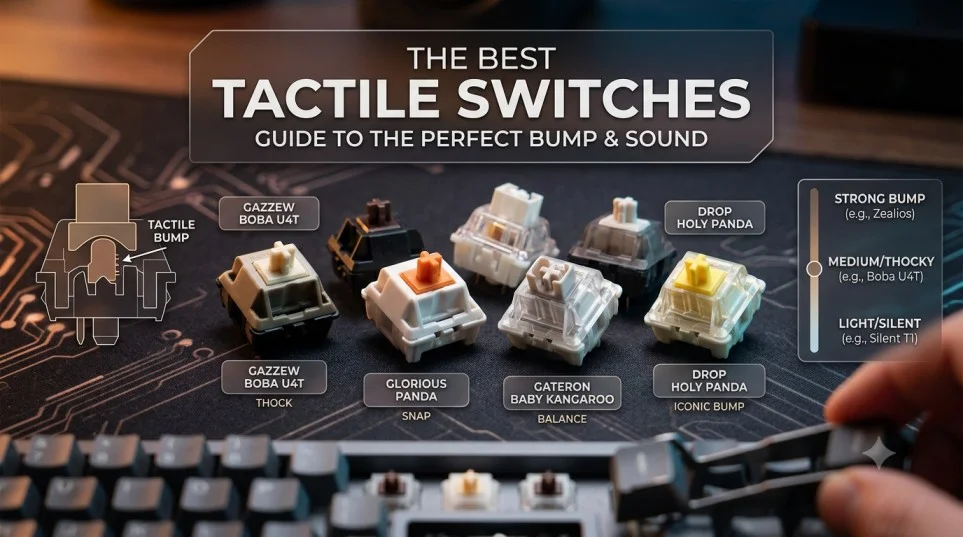
Mechanical keyboards have become increasingly popular among gamers, programmers, writers, and office professionals. One of the biggest reasons is the variety of Tactile switch types available, each offering a unique typing experience. If you’re searching for the best tactile switches, you’re likely looking for a balance between smooth key presses and noticeable feedback without the loud click associated with clicky switches.
This guide explains what tactile switches are, their benefits, how they compare with other switch types, and what features to consider before choosing the right option for your keyboard.
What Are Tactile Switches?
Tactile switches are mechanical keyboard switches that provide a noticeable bump during each key press. This tactile feedback lets you feel when a key has actuated, making typing more accurate and satisfying for many users.
Unlike clicky switches, tactile switches generally produce less noise while still offering physical feedback. Compared with linear switches, they provide a more defined typing experience because of the tactile bump.
Why Choose Tactile Switches?
Many keyboard enthusiasts prefer tactile switches because they combine comfort, responsiveness, and versatility.
Some of the main advantages include:
- Noticeable tactile feedback
- Improved typing accuracy
- Comfortable for long typing sessions
- Suitable for gaming and productivity
- Generally quieter than clicky switches
- Available in many force levels
These characteristics make tactile switches an excellent all-around choice for different users.
Best Feeling Tactile Switches
The best fevary eling tactile switches depending on personal preference, but several characteristics consistently contribute to a satisfying typing experience.
Look for switches that offer:
- A well-defined tactile bump
- Smooth key travel
- Stable keypresses
- Consistent actuation
- High-quality construction
- Minimal spring noise
Some users prefer a subtle tactile bump, while others enjoy a stronger, more pronounced feel.
Best Silent Tactile Switch
If you work in a shared office, attend online meetings, or simply prefer a quieter keyboard, choosing the best silent tactile switch can make a significant difference.
Silent tactile switches typically include internal dampening features that reduce the sound created when pressing and releasing keys.
Benefits include:
- Reduced typing noise
- Comfortable tactile feedback
- Less distraction for others
- Suitable for home and office environments
These switches allow you to enjoy tactile feedback without generating excessive noise.
Tactile vs. Linear Switches
One of the most common comparisons is between tactile and linear switches.
Tactile Switches
Advantages:
- Physical feedback during key presses
- Better typing confidence for many users
- Easier to feel key actuation
Best suited for:
- Typing
- Programming
- Office work
- Mixed gaming and productivity
Linear Switches
Advantages:
- Smooth key travel
- No tactile bump
- Fast repeated key presses
Best suited for:
- Competitive gaming
- Users who prefer uninterrupted movement
Choosing between them depends largely on personal preference.
Tactile vs. Clicky Switches
Clicky switches also provide tactile feedback but include an audible click with each key press.
Compared with clicky switches, tactile switches usually offer:
- Quieter operation
- Better suitability for shared workspaces
- Similar typing feedback without excessive noise
Many users consider tactile switches a practical middle ground.
Features to Consider
Before purchasing mechanical switches, consider the following factors.
Actuation Force
Actuation force refers to the amount of pressure needed to register a key press.
Lighter switches require less effort, while heavier switches reduce accidental key presses.
Travel Distance
Travel distance affects how far a key moves before actuating and bottoming out.
Some users prefer shorter travel for speed, while others enjoy traditional full-travel switches.
Build Quality
Higher-quality switches often feature:
- Durable housings
- Stable stems
- Consistent springs
- Smooth operation
Quality construction contributes to a better typing experience over time.
Durability
Many mechanical switches are rated for tens of millions of key presses, making them suitable for years of regular use.
Always review the manufacturer’s durability specifications before purchasing.
Are Tactile Switches Good for Gaming?
Yes. Many gamers appreciate tactile switches because they provide physical confirmation that a key has been pressed.
Benefits include:
- Improved key control
- Comfortable long gaming sessions
- Reduced accidental presses
- Responsive gameplay
However, competitive players who prioritize rapid repeated inputs may still prefer linear switches.
Are Tactile Switches Good for Typing?
Tactile switches are widely considered one of the best options for typing.
Their tactile bump helps users recognize when a keystroke has registered, potentially improving accuracy and reducing typing fatigue during extended sessions.
Writers, programmers, students, and office workers often choose tactile switches for this reason.
Maintenance Tips
Proper maintenance helps keep your keyboard performing well.
Recommended practices include:
- Remove dust regularly.
- Clean keycaps periodically.
- Avoid spills.
- Store the keyboard in a clean environment.
- Replace worn keycaps if necessary.
Routine cleaning helps maintain smooth switch performance.
Read Also : Bio Hazard Cleaning: Complete Guide, Process & Costs
Choosing the Right Tactile Switch
When selecting a tactile switch, think about how you’ll primarily use your keyboard.
Questions to consider include:
- Will you mostly type or game?
- Do you need a quieter keyboard?
- Do you prefer light or heavy key presses?
- Are you building a custom keyboard?
- What’s your budget?
Answering these questions will help narrow your options.
Final Thoughts
The best tactile switches provide an excellent balance between comfort, responsiveness, and typing satisfaction. Whether you’re building your first mechanical keyboard or upgrading an existing one, choosing switches with the right actuation force, tactile feel, and noise level can significantly improve your overall experience.
If you spend long hours typing, coding, or gaming, investing time in comparing different tactile switch characteristics is worthwhile. Since switch preference is highly personal, testing sample switches whenever possible can help you find the option that feels most comfortable for your hands and typing style.
Frequently Asked Questions
What are tactile switches?
Tactile switches are mechanical keyboard switches that feature a noticeable bump during key presses, providing physical feedback when a key actuates.
Are tactile switches better than linear switches?
Neither is universally better. Tactile switches offer feedback that many users enjoy for typing, while linear switches provide smooth, uninterrupted key travel that some gamers prefer.
What are the best feeling tactile switches?
The best-feeling tactile switches are those that provide a smooth, consistent tactile bump, stable operation, and comfortable actuation. The ideal choice depends on individual preference.
What is the best silent tactile switch?
A good silent tactile switch combines noticeable tactile feedback with built-in dampening to reduce typing noise, making it suitable for offices and shared spaces.
Are tactile switches good for gaming?
Yes. Many gamers use tactile switches because they provide responsive feedback while remaining versatile for both gaming and everyday typing.
How long do tactile switches last?
Most quality mechanical switches are designed to withstand tens of millions of key presses, though actual lifespan depends on usage and maintenance.