

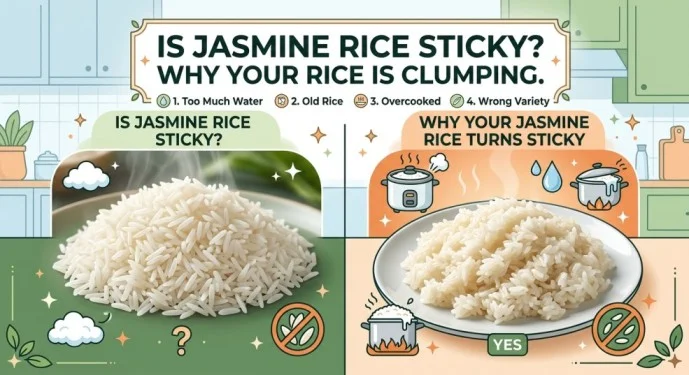
If you’ve ever cooked jasmine rice and ended up with a soft, clumpy bowl instead of separate fluffy grains, you may have wondered, “Is jasmine rice sticky?” or “Is jasmine rice supposed to be sticky?”
The answer is a little more complicated than simply saying yes or no. Jasmine rice is naturally softer and slightly sticky compared with some other long-grain rice varieties. However, properly cooked jasmine rice should generally have tender grains that hold together lightly rather than becoming extremely wet, mushy, or glue-like.
If your jasmine rice is much stickier than expected, the cooking method is usually the reason.
Is Jasmine Rice Sticky?
Yes, jasmine rice can be slightly sticky, but it isn’t considered a truly sticky rice like glutinous or sweet rice.
Jasmine rice is a long-grain variety, most commonly associated with Thailand and other parts of Southeast Asia. When cooked correctly, its grains become soft, tender, and slightly clingy while still maintaining their individual shape.
This texture makes jasmine rice popular with many Asian dishes, curries, stir-fries, grilled meats, and vegetables.
The natural starch in jasmine rice is responsible for some of its stickiness. When rice is heated with water, starch absorbs moisture and becomes softer. The amount of starch released during cooking can affect how separate or sticky the finished rice becomes.
Is Jasmine Rice Supposed to Be Sticky?
Slightly sticky, yes. Extremely sticky, no.
Perfectly cooked jasmine rice should generally have tender, fluffy grains that can cling together a little. You shouldn’t expect every grain to remain completely separate like some varieties of basmati rice.If your jasmine rice forms large clumps, feels wet, or has a mushy texture, you may be using too much water, cooking it for too long, or disturbing the rice too much during cooking.
Why Is My Jasmine Rice Sticky?
There are several possible reasons why your jasmine rice turns sticky.
1. You Used Too Much Water
One of the most common causes of sticky jasmine rice is too much water.When rice absorbs more water than necessary, the grains can become overly soft. Extra moisture can also cause starch to spread around the grains, producing a sticky or mushy texture.The ideal water-to-rice ratio can vary depending on the brand, cooking method, pot, and whether you rinse the rice. It’s usually better to follow the instructions on your specific package before experimenting with the ratio.
2. You Didn’t Rinse the Rice
Rice naturally contains surface starch. If you don’t rinse jasmine rice before cooking, some of that loose starch remains on the outside of the grains.
During cooking, this starch can make the finished rice more sticky.
Rinsing the rice under cool water several times can remove some of the excess surface starch. You don’t necessarily need to rinse until the water becomes completely clear, but washing it until the water looks noticeably less cloudy can help.
3. You Stirred the Rice Too Much
Another reason jasmine rice is sticky can be excessive stirring.When rice cooks, stirring can disturb the grains and release additional starch into the cooking water. That starch can make the rice stick together.Once the rice begins cooking, it’s generally best to leave it alone and keep the lid closed unless your recipe specifically says otherwise.
4. You Cooked It for Too Long
Overcooking can turn fluffy jasmine rice into soft, sticky rice.As the grains continue absorbing water, their structure becomes increasingly soft. Eventually, they can break apart and release more starch.For better results, follow the cooking time recommended on the package and avoid leaving the rice sitting over high heat after the water has been absorbed.
5. You Didn’t Let the Rice Rest
Resting rice after cooking is an easy step that many people skip.
Once your jasmine rice has finished cooking, turn off the heat and let it sit covered for around 5–10 minutes. This allows moisture to distribute more evenly throughout the grains.
After resting, gently fluff the rice with a fork or rice paddle. Avoid aggressively stirring it because that can break the grains and increase stickiness.
Is Jasmine Rice the Same as Sticky Rice?
No. Jasmine rice and sticky rice are different types of rice.
Sticky rice, also called glutinous rice or sweet rice, has a naturally much stickier texture when cooked. It is commonly used in dishes such as Thai mango sticky rice.So if you’re asking “is jasmine rice sticky rice?”, the answer is no.
Can You Fix Sticky Jasmine Rice?
Sometimes you can improve rice that has become too sticky.
If the rice is only slightly sticky, spread it gently on a plate or baking sheet for a few minutes to allow some steam and moisture to escape. Then fluff it carefully with a fork.
If it is extremely mushy because too much water was used, it may be difficult to return it to a perfectly fluffy texture. In that case, you can use it in fried rice, rice bowls, soups, or other recipes where a softer texture isn’t a problem.
Read Also : Burger King Whopper Menu: Sandwiches & Combos
Final Thoughts
So, is jasmine rice sticky? It can be slightly sticky, and that’s completely normal. Jasmine rice naturally has a soft texture and can cling together more than certain other long-grain varieties.
However, if your rice is consistently wet, mushy, or heavily clumped, the most likely causes are too much water, insufficient rinsing, excessive stirring, overcooking, or skipping the resting period.
Frequently Asked Questions
Is jasmine rice supposed to be sticky?
Jasmine rice is naturally slightly sticky when cooked, but it shouldn’t normally be extremely wet or glue-like.
Is jasmine rice sticky rice?
No. Jasmine rice is a fragrant long-grain variety, while sticky rice is a different type of rice with a much more adhesive texture.
Why is my jasmine rice sticky?
The most common causes are too much water, excess surface starch, overcooking, or stirring the rice too much while it cooks.
Does rinsing jasmine rice make it less sticky?
Yes. Rinsing removes some surface starch and can help produce grains that are less clumped after cooking.
How do I make jasmine rice fluffy?
Use the correct water ratio, rinse the rice, avoid stirring during cooking, and let it rest covered for 5–10 minutes before gently fluffing it.