

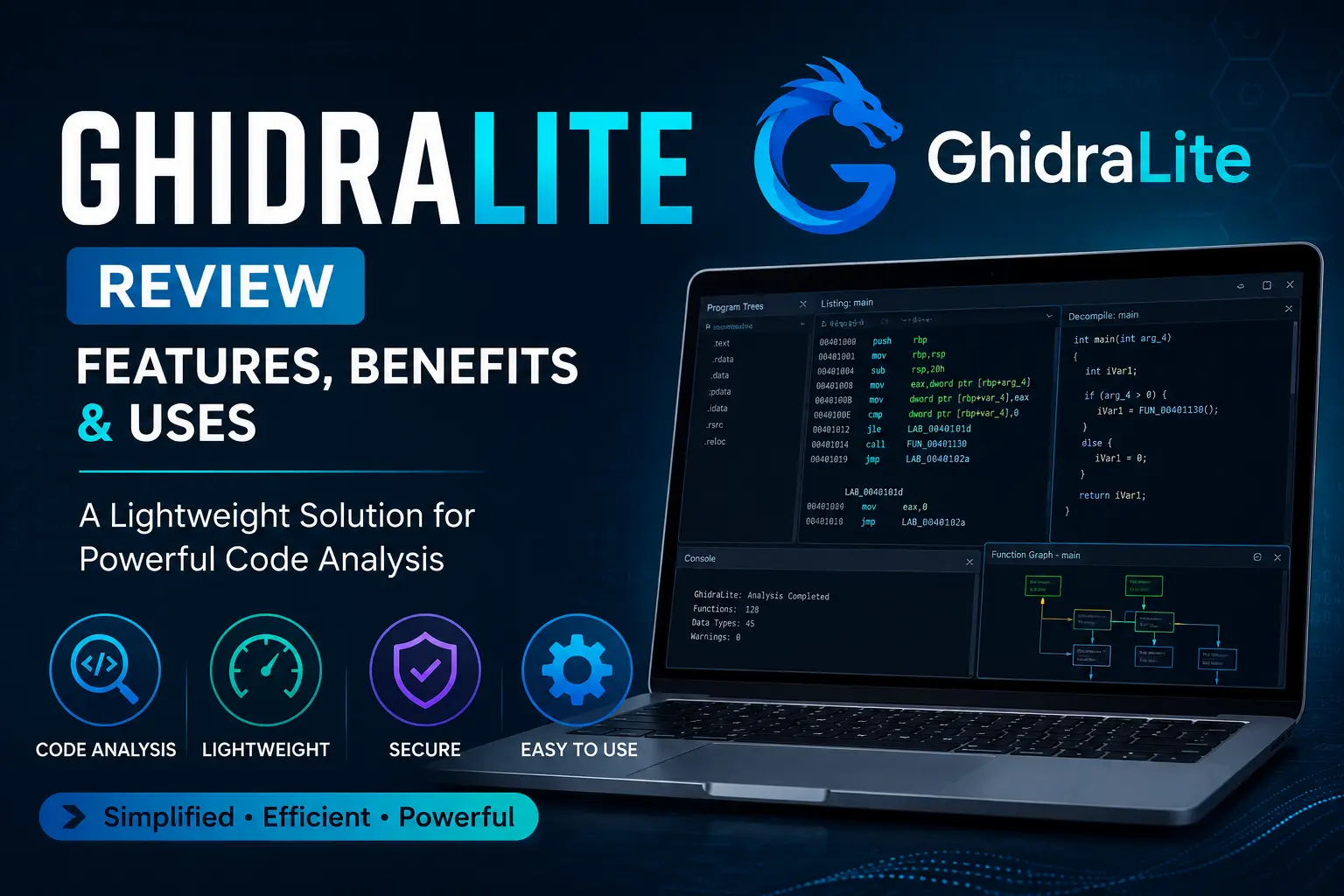
In the rapidly evolving world of cybersecurity, reverse engineering and malware analysis are critical skills. For years, the industry standard for these tasks has been Ghidra, the powerful software reverse engineering (SRE) suite developed by the National Security Agency (NSA). While Ghidra is incredibly capable, it is also notoriously resource-heavy and complex, often requiring significant setup time and a robust computing environment. Enter ghidralite—a streamlined, optimized approach designed to bring the power of reverse engineering to more accessible environments.
Whether you are a security researcher working on a low-power device or a student looking to dive into binary analysis without the overhead of a full-scale enterprise suite, understanding how ghidralite fits into your workflow is essential. In this review, we explore the features, benefits, and practical applications of this tool, helping you decide if it belongs in your cybersecurity toolkit.
What is GhidraLite?
At its core, ghidralite is an effort to provide a lighter-weight interface or a specialized configuration for the Ghidra engine. It is designed to remove the “bloat” that often accompanies the full Java-based installation of the standard Ghidra suite. By stripping away non-essential services and optimizing memory allocation, it allows users to perform static analysis, decompilation, and disassembly on hardware that might otherwise struggle to run the full application.
The primary philosophy behind this project is accessibility. Cybersecurity tools often suffer from high barriers to entry, both in terms of learning curve and hardware requirements. By simplifying the interface and reducing the dependency footprint, it empowers researchers to conduct quick analysis tasks—such as checking a binary’s imports or reviewing a specific function’s logic—without waiting for a heavy application to load.
Key Features of GhidraLite
The functionality of ghidralite is centered around maintaining the core decompilation engine while optimizing the delivery. Some of the standout features include:
- Optimized Resource Management: It significantly reduces RAM usage, making it ideal for running on virtual machines or older hardware.
- Faster Startup Times: By loading only the necessary modules, the time from clicking the icon to analyzing a binary is cut down significantly.
- Simplified Interface: For those who find the standard Ghidra GUI overwhelming, this version focuses on the essential panels: the Listing view, the Decompiler, and the Symbol Tree.
- Cross-Platform Compatibility: Like its predecessor, it remains highly portable across Windows, Linux, and macOS environments, provided the Java Runtime Environment is configured correctly.
- Scripting Support: Many of the standard Ghidra scripts remain compatible, allowing users to automate repetitive tasks during binary analysis.
Benefits for Security Researchers and Students
Why choose this stripped-down version over the full suite? The benefits are twofold: performance and focus.
1. Performance on Limited Hardware
Many security researchers work in the field using laptops with limited specifications. When you are analyzing a binary in a sandboxed environment, every megabyte of RAM counts. Using ghidralite ensures that your host machine remains responsive, preventing the system freezes often associated with the full Java-heavy build.
2. Reduced “Cognitive Load”
The standard Ghidra suite is a Swiss Army knife. It contains features for version tracking, collaborative server management, and complex project management. For a student or a researcher conducting a quick analysis, these features are often distractions. The streamlined interface allows for better focus on the code itself, leading to more efficient debugging and reverse engineering sessions.
Also Read: Newspagebuilder | Daily News, Tech & Business
Practical Uses and Applications
The primary use case for ghidralite is rapid binary triage. In an incident response scenario, time is of the essence. When a suspicious file is flagged, an analyst needs to know what it does immediately. Using a lightweight tool allows the analyst to:
- Identify Malicious Imports: Quickly check if a binary is calling suspicious Windows APIs or networking functions.
- String Analysis: Extract hardcoded IP addresses or command-and-control (C2) domains without loading a massive project.
- Function Logic Review: Use the decompiler to translate machine code into readable C-like code to understand the malware’s payload.
- Learning and Education: It serves as an excellent starting point for students who find the full Ghidra experience intimidating, allowing them to learn the fundamentals of disassembly without getting lost in the UI’s advanced settings.
Limitations to Consider
While ghidralite is a powerful alternative, it is important to acknowledge that it is not a complete replacement for the full Ghidra suite in every scenario. If you are working on a massive project involving thousands of files or require the multi-user collaboration features provided by the Ghidra Server, the full version remains the necessary choice. Users should evaluate their specific needs: if you are performing deep, long-term research on complex firmware, stick with the full version. If you are doing quick triage or educational work, this lightweight version is superior.
Conclusion
In the world of binary analysis, the best tool is the one that allows you to work efficiently. ghidralite fills a vital niche, providing a high-performance alternative for those who need the power of the Ghidra decompiler without the resource-heavy overhead of the standard suite. By prioritizing speed, accessibility, and focus, it lowers the barrier to entry for beginners while providing a streamlined workflow for seasoned professionals.
Whether you are conducting rapid malware triage or learning the ropes of reverse engineering, incorporating ghidralite into your workflow can save you time, hardware resources, and mental energy. While it may not replace the full suite for large-scale enterprise projects, its utility in everyday security tasks is undeniable. If you haven’t yet explored how a lightweight approach can benefit your reverse engineering process, now is the time to give it a try.