
The 661 area code is a well-known telephone area code in California, serving a large portion of the state’s southern Central Valley and parts of northern Los Angeles County. Whether you’ve received a call from a 661 area code number or want to learn more about where it is used, understanding its coverage, history, and time zone can help you identify the origin of the call.
This guide explains everything you need to know about the 661 area code, including its location, major cities, history, dialing requirements, and answers to frequently asked questions.
Read also; 504 Area Code: Location, Cities & Everything You Need to Know
Where Is the 661 Area Code Located?
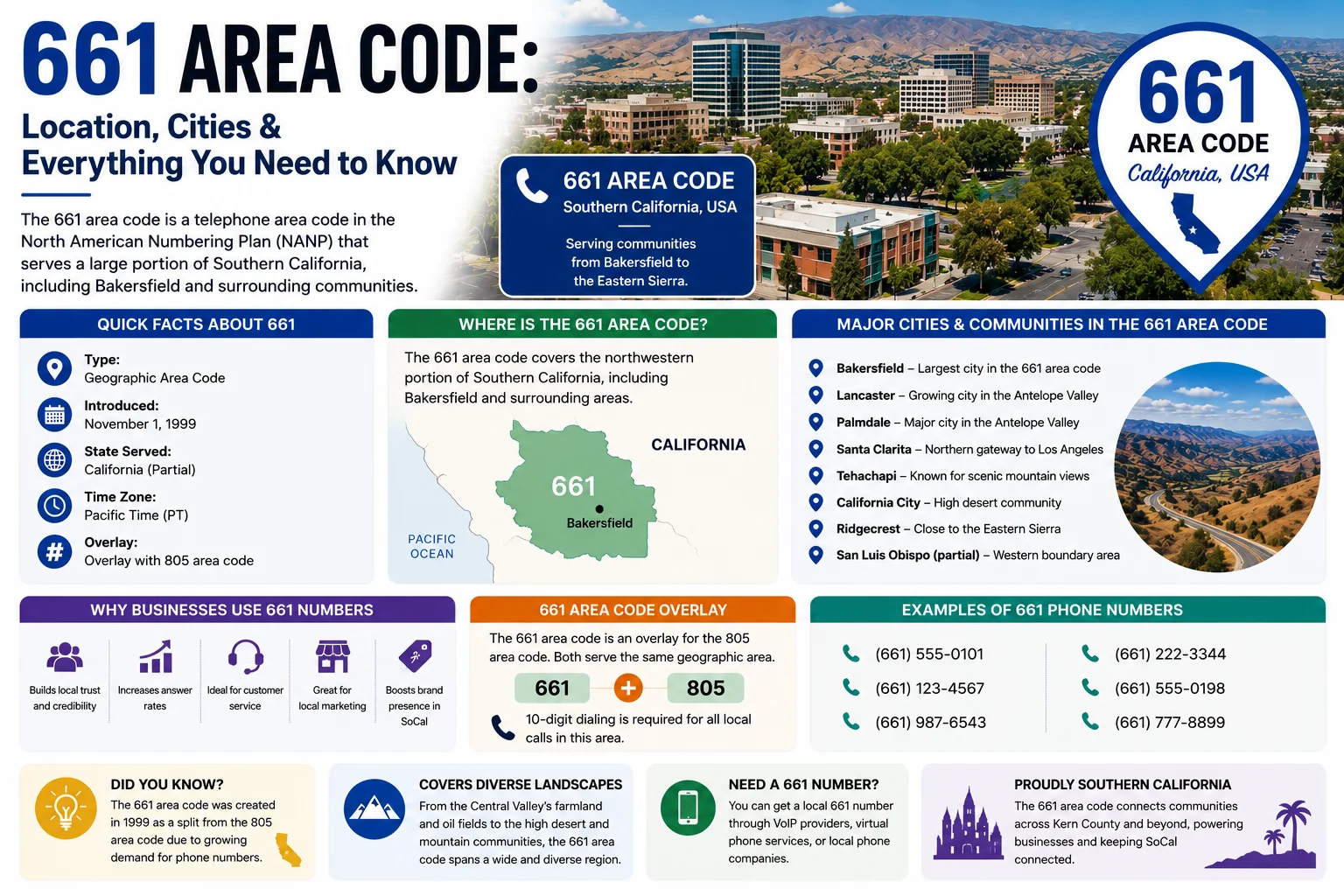
The 661 area code is located in Southern California and primarily serves Kern County along with portions of Los Angeles County, Tulare County, and Santa Barbara County. It is one of California’s important geographic area codes and is widely used by residents, businesses, schools, healthcare providers, and government agencies.
The region includes a mix of metropolitan areas, agricultural communities, and growing suburban neighborhoods, making the 661 area code an important part of California’s telecommunications network.
Major Cities Covered by the 661 Area Code
The 661 area code covers numerous cities and communities across Southern California. Some of the most recognized locations include:
- Bakersfield
- Lancaster
- Palmdale
- Santa Clarita (northern portions)
- Tehachapi
- Delano
- California City
- Arvin
- Wasco
- Shafter
- McFarland
- Frazier Park
These communities vary from large urban centers to smaller towns, supporting a wide range of residential, commercial, and industrial activities.
What Time Zone Is the 661 Area Code In?
All locations using the 661 area code follow the Pacific Time Zone (PT).
This includes:
- Pacific Standard Time (PST) during the fall and winter months.
- Pacific Daylight Time (PDT) when Daylight Saving Time is observed during spring and summer.
If you’re calling someone in the 661 area, remember to account for the time difference if you’re located in another time zone.
History of the 661 Area Code
The 661 area code was introduced on February 13, 1999, after being split from California’s 805 area code.
During the late 1990s, California experienced rapid growth in population and technology. The increasing number of mobile phones, fax machines, pagers, business lines, and internet services created a shortage of available telephone numbers.
To meet this growing demand, telecommunications authorities divided the existing 805 area, creating the new 661 area code for much of Kern County and nearby regions while allowing the 805 area code to continue serving California’s central coast.
Since its introduction, the 661 area code has supported the continued growth of businesses, residential developments, and communication services throughout Southern California.
Why Was the 661 Area Code Created?
Several factors contributed to the creation of the 661 area code, including:
- Rapid population growth
- Increased mobile phone ownership
- Expansion of local businesses
- More residential housing developments
- Growth in internet and VoIP services
- Higher demand for new telephone numbers
Without the split, the existing supply of phone numbers would eventually have been exhausted.
Do You Need to Dial the Area Code?
Yes. In most situations, 10-digit dialing is required when placing local calls within the 661 service area.
The standard dialing format is:
- Area code
- Seven-digit local phone number
Using the complete 10-digit number helps ensure your call reaches the correct destination, especially because California has multiple area codes serving neighboring regions.
Is the 661 Area Code Safe?
A phone number with the 661 area code is generally legitimate and simply indicates that it was assigned within Southern California.
However, it’s important to remember that modern scammers can spoof any area code, including 661. Because of this, you should always exercise caution when receiving unexpected calls.
Here are a few safety tips:
- Never share banking or personal information with unknown callers.
- Verify the identity of businesses before making payments.
- Be cautious of callers requesting gift cards, wire transfers, or urgent payments.
- Hang up on suspicious robocalls.
- Report and block spam numbers whenever possible.
Receiving a call from the 661 area code does not automatically mean the caller is located in California, as caller ID information can sometimes be manipulated.
Conclusion
The 661 area code plays a vital role in Southern California’s communication network, serving major cities such as Bakersfield, Lancaster, Palmdale, and many surrounding communities. Introduced in 1999 to meet the region’s growing demand for telephone numbers, it continues to support millions of residents and businesses across Central and Southern California. Whether you’re identifying an incoming call, researching a phone number, or learning more about California’s telephone system, understanding the 661 area code, its location, history, and coverage provides valuable insight into where those calls originate.
Frequently Asked Questions
Where is the 661 area code located?
The 661 area code serves Southern California, primarily covering Kern County and parts of northern Los Angeles County.
What cities use the 661 area code?
Major cities include Bakersfield, Lancaster, Palmdale, Delano, Tehachapi, California City, Arvin, Wasco, Shafter, and parts of Santa Clarita.
What time zone does the 661 area code use?
The entire 661 area follows the Pacific Time Zone (PT), using Pacific Standard Time (PST) and Pacific Daylight Time (PDT) during Daylight Saving Time.
Is the 661 area code toll-free?
No. The 661 area code is a geographic telephone area code assigned to Southern California and is not a toll-free code.
When was the 661 area code introduced?
The 661 area code officially went into service in 1999 after splitting from the 805 area code.
Can a 661 phone number be a scam?
While many legitimate individuals and businesses use 661 phone numbers, scammers can spoof any area code. Always verify unexpected callers before sharing sensitive information.