

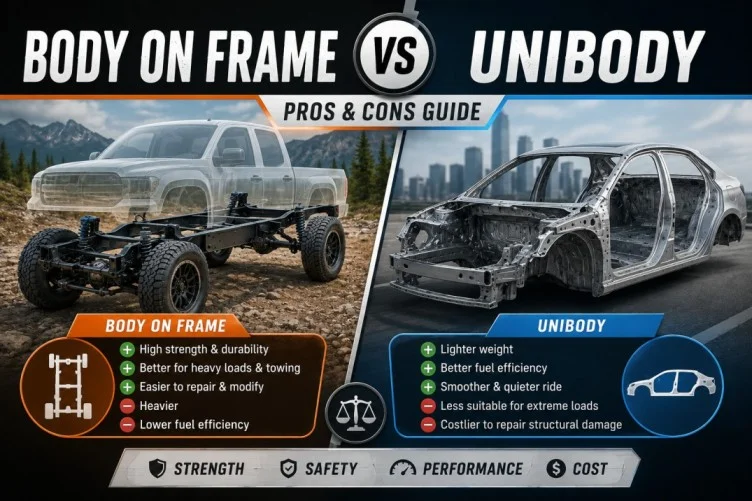
When shopping for a new vehicle, you may come across the terms body on frame vs unibody. These refer to two different methods of vehicle construction, and each has its own strengths and weaknesses. Understanding the differences can help you choose a vehicle that matches your driving habits, whether you prioritize comfort, towing capability, fuel efficiency, or off-road performance.
In this guide, we’ll compare unibody vs body on frame, explain how each design works, and discuss their advantages, disadvantages, and common applications.
What Is Body-on-Frame Construction?
Body-on-frame construction is a traditional vehicle design in which the vehicle’s body is mounted on a separate steel frame or chassis. The frame supports the engine, suspension, and drivetrain, while the body is attached to it.
This construction method has been widely used for:
- Pickup trucks
- Large SUVs
- Commercial vehicles
- Heavy-duty work vehicles
Because the frame carries most of the structural load, body-on-frame vehicles are known for their strength and durability.
What Is Unibody Construction?
Unibody construction integrates the body and frame into a single structural unit. Instead of relying on a separate chassis, the vehicle’s body panels and structural components work together to provide strength and rigidity.
Most modern vehicles use unibody construction, including:
- Sedans
- Hatchbacks
- Crossovers
- Compact SUVs
- Minivans
This design helps reduce weight while improving handling and fuel efficiency.
Body on Frame vs Unibody Construction
The biggest difference in body on frame vs unibody construction is how the vehicle’s structure is built.
| Feature | Body-on-Frame | Unibody |
| Structure | Separate frame and body | Integrated body and frame |
| Weight | Heavier | Lighter |
| Ride Comfort | Generally firmer | Generally smoother |
| Fuel Efficiency | Usually lower | Usually better |
| Towing | Excellent | Moderate to good (varies by model) |
| Off-Road Capability | Strong | Good on some models |
| Repair Costs | May vary depending on damage | Structural repairs can be more complex |
Advantages of Body-on-Frame
Many drivers choose body-on-frame vehicles because of their rugged design.
Key benefits include:
Excellent Towing Capacity
The separate frame allows many trucks and SUVs to tow heavier loads than comparable unibody vehicles.
Better Off-Road Durability
Body-on-frame construction handles rough terrain well, making it a popular choice for off-road enthusiasts.
Greater Strength
The robust frame provides durability for demanding work environments and heavy-duty use.
Easier Modification
Many aftermarket accessories, suspension upgrades, and off-road modifications are designed specifically for body-on-frame vehicles.
Disadvantages of Body-on-Frame
Despite its strengths, this construction has some drawbacks.
Increased Weight
The separate frame adds weight, which can reduce fuel economy.
Less Responsive Handling
Heavier vehicles often feel less agile than similarly sized unibody models.
Reduced Fuel Efficiency
Extra weight typically leads to higher fuel consumption.
Advantages of Unibody Construction
Most modern passenger vehicles use unibody construction because of its many practical benefits.
Improved Fuel Economy
The lighter structure generally helps improve fuel efficiency.
Better Ride Quality
Unibody vehicles often deliver a smoother and more comfortable driving experience.
Enhanced Handling
Reduced weight and increased rigidity can improve steering response and cornering.
Efficient Manufacturing
Integrated construction simplifies production and contributes to lower overall vehicle weight.
Disadvantages of Unibody Construction
Although widely used, unibody vehicles also have limitations.
Lower Maximum Towing Capacity
Many unibody vehicles are not designed to tow the same heavy loads as body-on-frame trucks.
Complex Structural Repairs
Major collision damage affecting the integrated structure may require specialized repair procedures.
Less Suitable for Heavy-Duty Work
For commercial applications or demanding off-road use, body-on-frame designs are often preferred.
Safety Comparison
When comparing unibody vs. body on frame, safety depends on many factors beyond construction type, including:
- Crash-test performance
- Airbag systems
- Electronic safety features
- Vehicle size
- Structural engineering
Modern vehicles of both types are designed to meet applicable safety standards. Instead of assuming one construction method is always safer, review independent crash-test ratings and manufacturer safety information for the specific model you’re considering.
Which Is Better for Daily Driving?
For commuting and everyday use, many drivers appreciate the benefits of unibody vehicles, including:
- Better fuel economy
- Comfortable ride
- Easier parking
- Responsive handling
- Reduced road noise
These characteristics make unibody construction a common choice for family vehicles and urban driving.
Which Is Better for Towing?
If your primary goal is towing boats, trailers, or heavy equipment, body-on-frame vehicles are often favored because they are commonly engineered for higher towing capacities.
However, towing capability varies by make and model, so always check the manufacturer’s towing specifications before making a decision.
You may Know : Bowsette: Origin, Cosplay, Fan Art & Character Guide
Which Is Better for Off-Road Driving?
Serious off-road enthusiasts often choose body-on-frame vehicles because they typically offer:
- Stronger chassis
- Better durability on rough terrain
- Higher payload capacity
- Greater suspension flexibility
That said, some modern unibody SUVs also provide excellent off-road performance, depending on their design and equipment.
Choosing the Right Vehicle
Before deciding between these two construction methods, consider:
- How often you tow
- Where you usually drive
- Fuel economy priorities
- Passenger comfort
- Off-road needs
- Maintenance costs
- Budget
Matching the vehicle to your lifestyle is more important than choosing one construction type over the other.
Final Thoughts
Understanding body on frame vs unibody construction can make it easier to choose a vehicle that fits your needs. Body-on-frame designs remain a strong option for drivers who prioritize towing, durability, and off-road capability, while unibody construction offers advantages in fuel efficiency, ride comfort, and everyday handling.
Rather than focusing solely on construction type, compare the specific vehicles you’re considering by reviewing their safety ratings, towing capacity, fuel economy, and overall performance. Doing so will help you select a vehicle that best matches your driving habits and long-term expectations.
Frequently Asked Questions
What is the main difference between body on frame vs unibody?
Body-on-frame vehicles have a separate chassis with the body mounted on top, while unibody vehicles combine the body and structural frame into a single integrated unit.
Is body-on-frame stronger than unibody?
Body-on-frame construction is generally better suited for heavy-duty work, towing, and rugged off-road use due to its separate, robust frame.
Is a unibody better for daily driving?
Many drivers prefer unibody vehicles for everyday use because they typically offer better fuel efficiency, smoother handling, and a more comfortable ride.
Which construction is better for towing?
Body-on-frame vehicles often provide higher towing capacities, but the actual rating depends on the specific vehicle and manufacturer.
Are unibody vehicles safe?
Yes. Modern unibody vehicles are engineered to meet safety standards and often perform well in crash testing. Safety depends on the overall vehicle design, not just its construction type.
Which type lasts longer?
Longevity depends on maintenance, driving conditions, and build quality. Both body-on-frame and unibody vehicles can provide many years of reliable service when properly maintained.